← K-FIT: Kuchipudi Cardio Workout
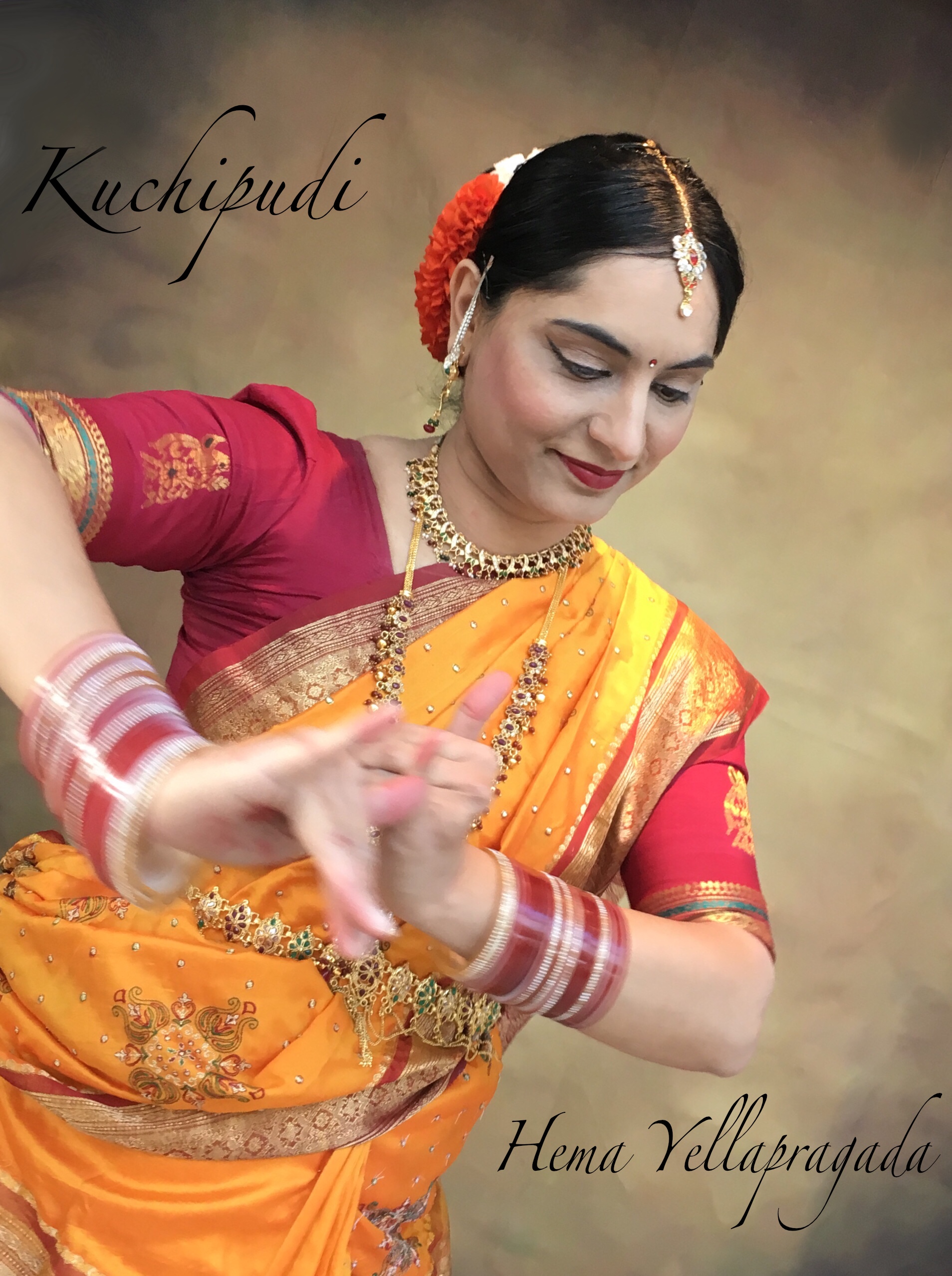
Your teacher
Hema and the Kuchipudi lineage
Kuchipudi teacher · Vempati Chinna Satyam style
Hema Yellapragada
Hema began learning dance at the age of three. At four she gave her first solo performance, to an audience of around a thousand, and by twelve she had won an all-India dance and music award, along with several district and state awards.
She has performed solo on major stages such as Ravindra Bharati in Hyderabad, and has danced roles in ballets composed by her gurus. Her performances have been broadcast on Doordarshan, India's national broadcaster, several times.
She credits her achievements to her guru, Smt Rajeshwari, and counts herself fortunate that her teacher's own guru was Padma Bhushan Dr Vempati Chinna Satyam, whose name is synonymous with Kuchipudi. Hema has trained in his style since she was four.
Where Kuchipudi comes from
Every Indian classical dance form, Kuchipudi included, traces its roots to the Natya Shastra, the treatise on performance attributed to the sage Bharata Muni. It runs to 36 chapters and over 6,000 verses, and is said to draw on the Gandharva Veda, an ancillary text of the Sama Veda.
Kuchipudi is one of eight dance forms recognised as classical by the Sangeet Natak Akademi, India's national academy for music, dance and drama.
The form danced today owes most to Siddhendra Yogi, a 14th-century scholar and artist. He reworked the Yakshagana folk dance-dramas of his time into a classical format, widening what the form could do. The dance took its name from Kuchipudi, the village in Andhra Pradesh where he first taught and performed.
The art itself is older than his reforms. For centuries it was taught to, and performed by, Brahmin boys in a few families in Andhra Pradesh. Alongside the Natya Shastra, Sanskrit texts such as Nandikeshwara's Abhinaya Darpanam became central to it, and because so few families could read and interpret them, the form stayed within those households.
In the 20th century the texts were translated into regional languages, and people outside the traditional families began to learn. Women entered the form, teaching was gathered into institutions, and the new film industry drew many of the finest dancers and gurus. Kuchipudi found a far wider audience.
Dr Vempati Chinna Satyam
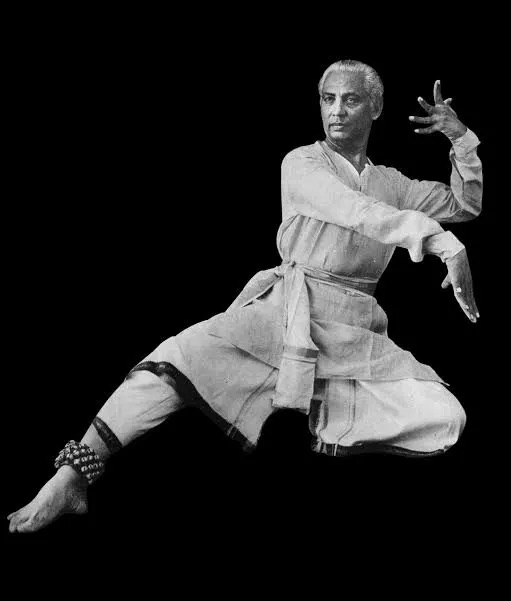
The person most responsible for that renewal was Padma Bhushan Dr Vempati Chinna Satyam. Inspired by his guru, Vedantam Lakshminarayana Sastry, he resolved to carry Kuchipudi, his family's tradition, to its full potential.
In 1963 he founded the Kuchipudi Art Academy in Chennai, which brought the dance to audiences across India. He built a systematic method of teaching that showed what the form could do, and he is widely regarded as a great innovator.
Because the dance had been performed by men, he adapted parts of it for women, while taking care to keep the purity of its movement and adding finesse to every step. This is the style taught in K-FIT.
The guru-parampara
In Indian classical dance, knowledge passes from guru to student in an unbroken line, the guru-parampara.
- Vedantam Lakshminarayana Sastry
- Padma Bhushan Dr Vempati Chinna Satyam
- Smt Rajeshwari
- Hema Yellapragada
Each lesson in K-FIT carries something of that line.